SICANJE
Sicanje, also known as bocanje (“pricking”) or križićanje (“cross-making”), is a centuries-old tattooing tradition among Catholics in Bosnia and Herzegovina, which emerged during the Ottoman conquests as a means of preserving Christian identity.

THE ORIGIN OF SICANJE
THE ORIGIN OF SICANJE
Before the arrival of the Ottomans in the 15th century, the territory of Bosnia and Herzegovina was part of the medieval Bosnian state—first a banate (a medieval border province governed by a ban, the king’s representative) and later a kingdom—in which the majority of the population was Catholic.
The Ottoman conquest brought about major social and religious changes. During Ottoman rule, the process of Islamization began, and the Christian population, exposed to religious, political, legal, and tax restrictions, found itself in a less favorable social position. In such circumstances, part of the Catholic population emigrated from Bosnia, while others gradually integrated into the new social order by accepting Islam.
Women were particularly vulnerable and, according to tradition, were sometimes forcibly married or taken to harems. In such circumstances, Catholics began tattooing ornaments with a cross at the center—a practice known as sicanje. These tattoos were placed on visible parts of the body, such as the hands, forearms, forehead, or chest, serving as a permanent and indelible sign of Christian identity. According to folk tradition, a marked woman was less likely to be taken away.
Sicanje was practiced by Catholics in Bosnia and Herzegovina who, by language, religion, and cultural tradition, identify with the Croatian cultural sphere. For this reason, the practice is also referred to today as traditional Croatian tattooing. It was most widespread in central Bosnia (Jajce, Rama, Uskoplje, Kupres, and Kraljeva Sutjeska) and in the Turopolje region. To a lesser extent, it also appears in Croatia, between Sinj and Šibenik, as well as in the Dubrovnik-Neretva County.
SYMBOLS OF SICANJE
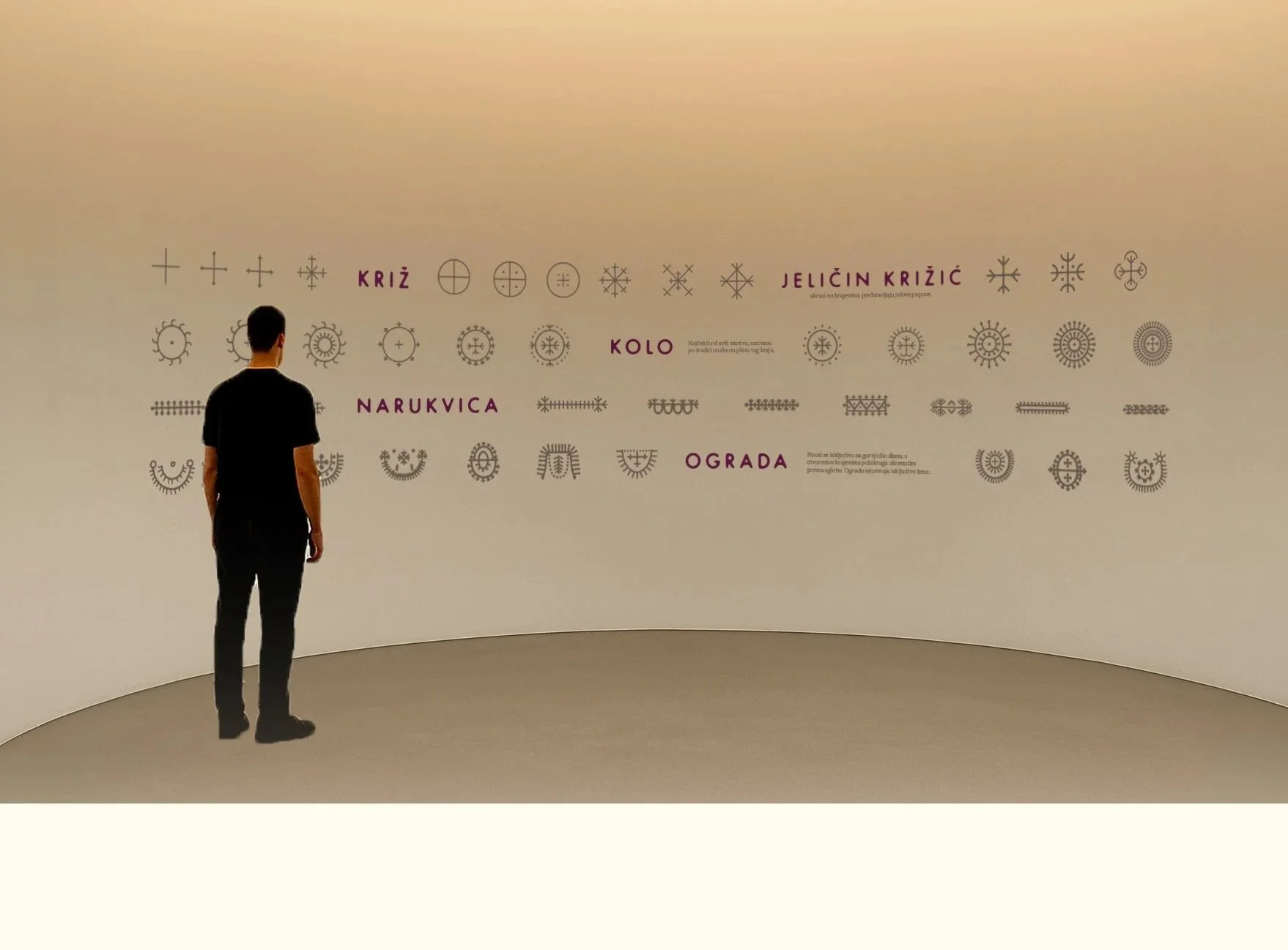
The most common motif of sicanje was the cross—a recognizable symbol of the Catholic faith. It was often surrounded by geometric and plant ornaments that formed various compositions known as kolo (“wheel”), ograda (“fence”), narukvica (“bracelet”), grana (“branch”), grančica (“twig”), jelica (“fir tree”), jeličin križ (“fir cross”), and klas (“ear of grain”).
TECHNIQUE AND RITUAL OF SICANJE
Sicanje was performed using a simple technique of pricking the skin with a needle. The motif was first drawn onto the skin, which was then pricked, after which a mixture made from natural ingredients—such as pine soot, honey, or other organic substances—was rubbed into the wound. Once the mixture was washed off, a permanent ornament remained on the skin.
Girls between the ages of 12 and 16 were most commonly tattooed, and the practice was usually carried out by older women within the family. Men were tattooed less frequently and most often wore simple crosses on their arms or foreheads.
Sicanje was most often performed on the feast of St. Joseph (March 19), who has been considered the patron saint of the Croatian people since the 17th century. The date coincides with the beginning of spring and with older spring rituals associated with the renewal of life. In some regions, sicanje was also performed on the Annunciation or Good Friday.
ORIGIN OF SYMBOLS
Crosses, along with many other motifs—the same ones found on stećak tombstones, distaffs, and embroidery—are part of an enigmatic pre-Slavic, pre-Christian, and pre-antique Balkan tradition, at least two to three thousand years old.
- (Lovrenović,2002)
Geometric symbols found in sicanje have deep historical roots. They originate from motifs associated with the Sun and celestial bodies, appearing as early as prehistory. One of the oldest is the sun wheel—a circular symbol with four, six, or eight spokes—which appears in the Bronze Age on ritual petroglyphs around the world. The circle often symbolizes the Sun, while the cross may represent the four cardinal directions or the seasons. Similar solar symbols have been found in archaeological sites across Europe, Asia, and Africa.
In the Bronze Age, the western Balkans were inhabited by the Illyrians, an Indo-European people whose religion was linked to the cults of natural forces. Solar symbols such as the sun wheel are common in their visual culture and have been found at numerous archaeological sites in Bosnia and Herzegovina. It is assumed that the Illyrians practiced tattooing, as evidenced by archaeological findings of tattooing needles discovered in the region.
Over the centuries, the territory of Bosnia and Herzegovina was inhabited by various peoples—Illyrians, Romans, Celts, and Slavs—who used similar geometric and solar symbols in their belief systems. These motifs have been preserved on Celtic coins, in Roman mithraea, and on medieval stećak tombstones. Due to this continuity, the symbols have endured in the region and gradually acquired new meanings, eventually becoming part of sicanje ornamentation during the Ottoman conquests.
WOMEN'S TATTOO
In many ancient cultures, tattoos played an important ritual and social role. Women wore them as symbols of protection, fertility, status, or belonging to a community.
Similar motifs and tattooing techniques appear in women’s tattoos around the world—from Europe and the Mediterranean to Asia, Africa, and the Americas.
SICANJE AFTER THE 20TH CENTURY
After the end of Ottoman rule, the tradition of sicanje continued until the Second World War. Tattoos served as a means of preserving the faith, customs, and ethnic identity of Catholics in Bosnia and Herzegovina. Girls often competed to have the most beautiful and numerous motifs.
After the end of the Second World War, the tradition gradually declined. In the new social circumstances, religious symbols were no longer encouraged, and sicanje eventually disappeared from everyday life
SICANJE TODAY
Today, the original meaning of sicanje symbols has largely been lost, but their ornaments are being rediscovered and reinterpreted in new ways: as a remembrance of ancestors, an aesthetic expression, or a symbol to which individuals assign their own meaning. In this way, sicanje motifs continue to live on and are increasingly present in tattoos, fashion, design, and popular culture.

Editorial Vogue Adria,2024

Artist OKO
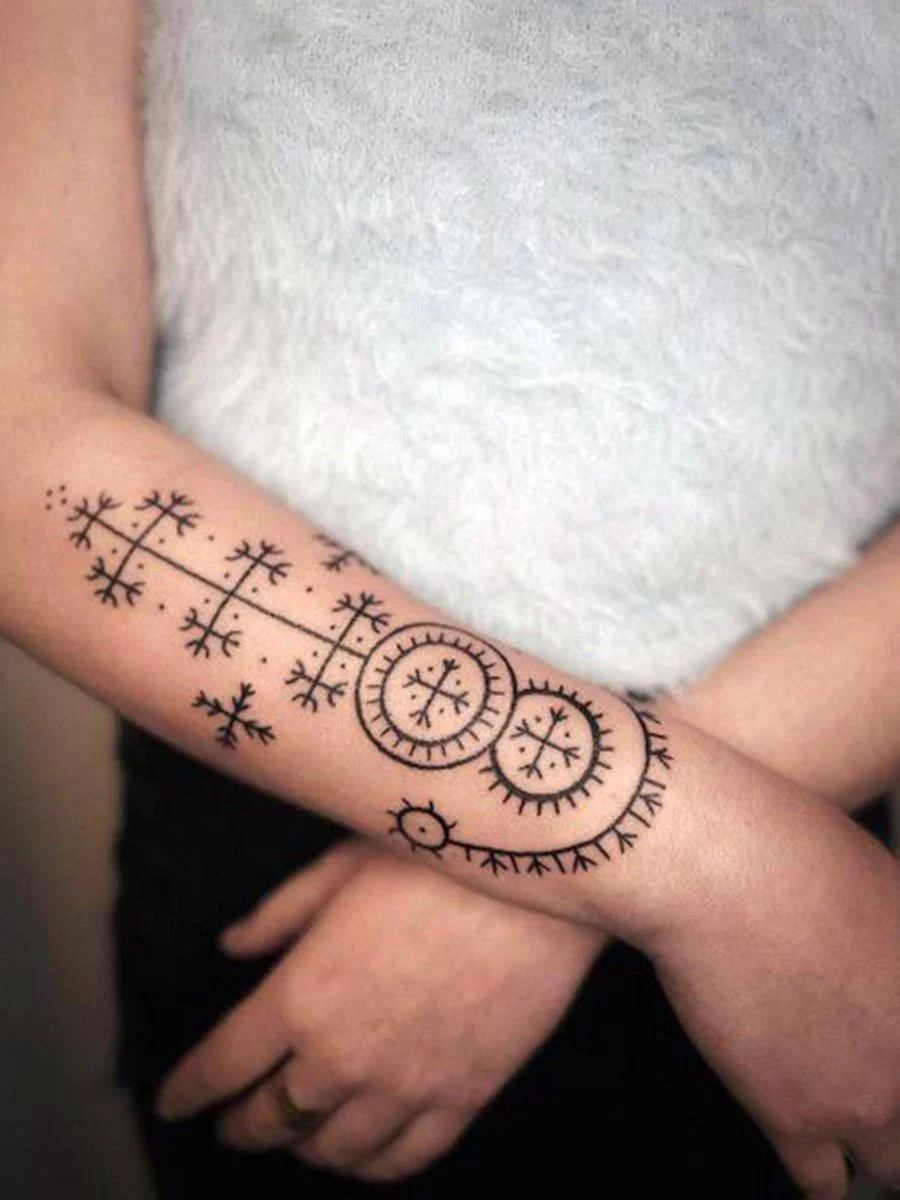
Work of the tattoo studio @melpzvc
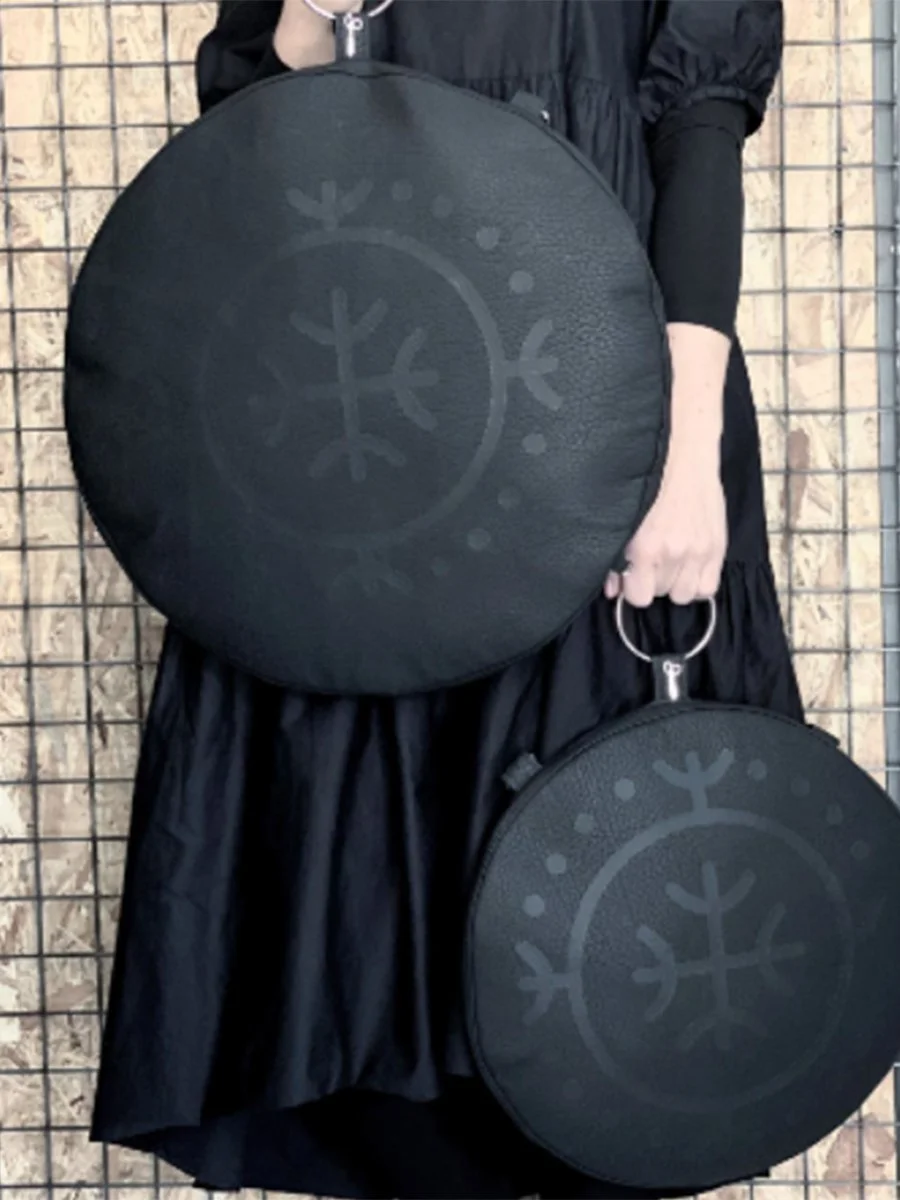
Bags Poppy x Saja
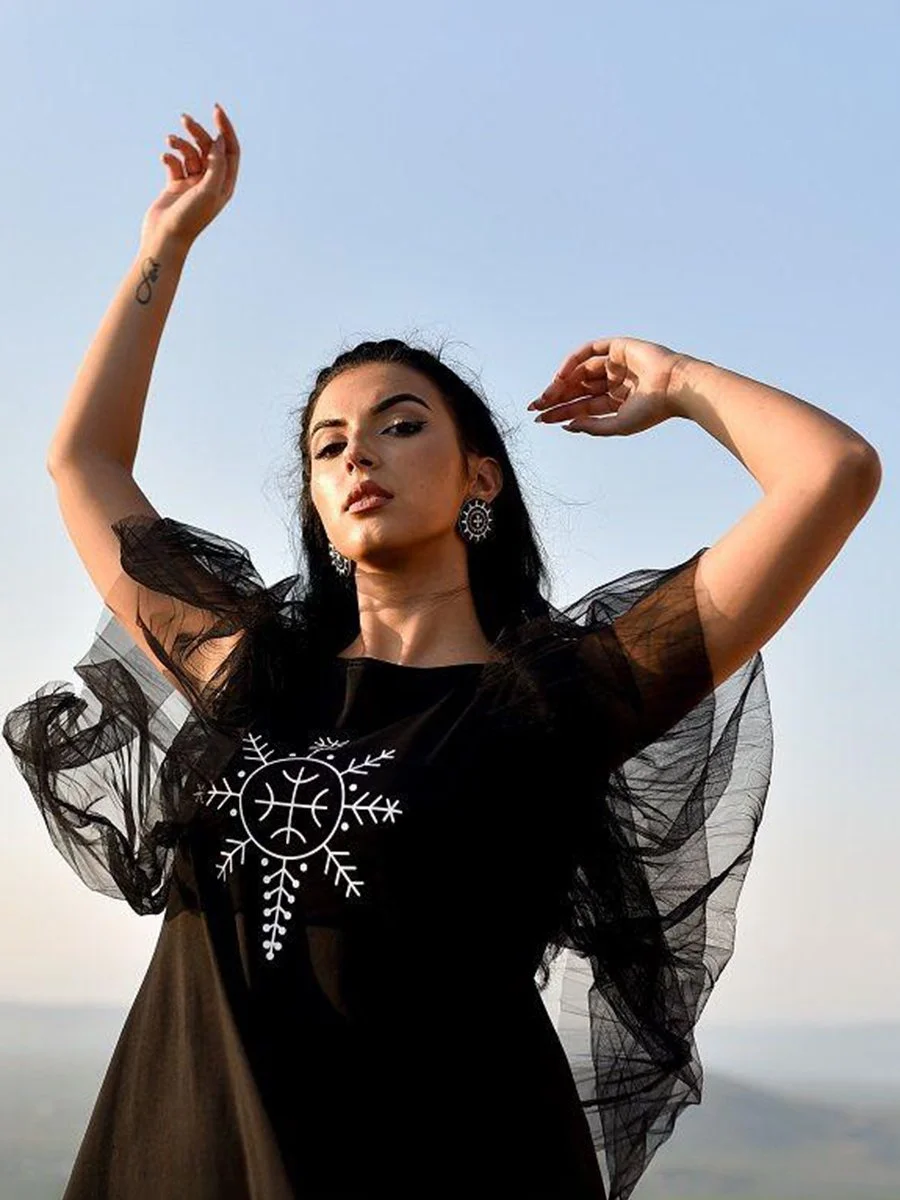
Shirt Poppy x Saja

Temporary tattoos